
Launching a website is a big step for any business. You spend time choosing the design, preparing content, adding your services and products, and making sure everything looks right before going live.
But there is one thing that is often forgotten after launch: website maintenance.
A website isn’t something you build once and then never touch again. Just like a car needs servicing and a physical shop needs regular maintenance, your website also needs attention from time to time.
Plugins need updates. Security issues need to be fixed. Content becomes outdated. Links stop working. Technology changes.
If these things are ignored for too long, small problems can eventually become expensive ones.
What Is Website Maintenance?
Website maintenance simply means keeping your website updated, secure, functional and useful after it has been launched.
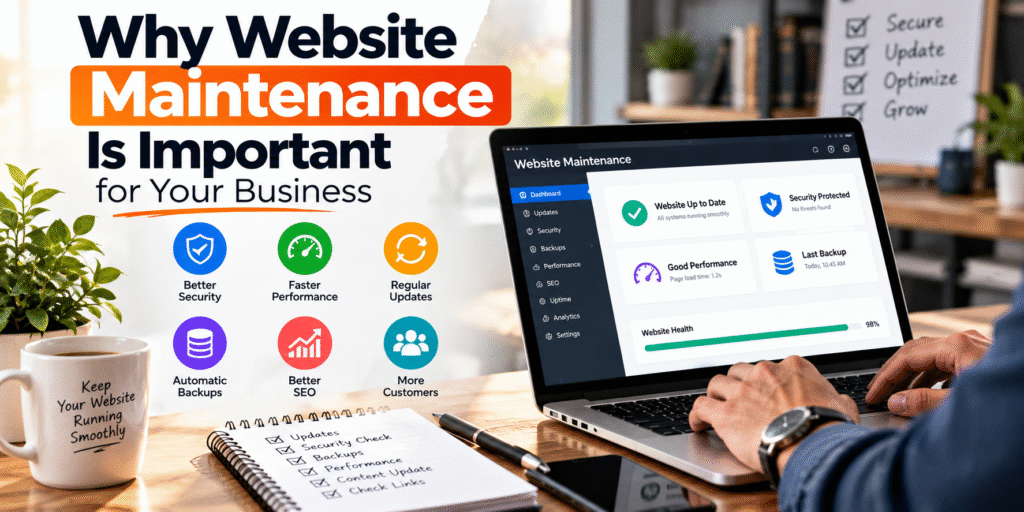
The exact work depends on the website, but it can include things such as:
- Updating WordPress and plugins
- Checking website security
- Creating regular backups
- Fixing broken links
- Updating outdated content
- Checking contact forms
- Monitoring website performance
- Optimizing images and files
- Checking mobile compatibility
- Removing unnecessary plugins
- Fixing technical errors
- Monitoring website uptime
Some businesses need maintenance every month, while others may only need occasional technical work.
The important thing is not to ignore the website completely.
Security Is One of the Biggest Reasons for Maintenance
Security is probably one of the most important reasons to keep your website maintained.
Websites built with WordPress and other content management systems often use themes, plugins and third-party software. These components are regularly updated to add features, improve compatibility and fix security vulnerabilities.
If you continue using old versions for a long time, you may leave your website exposed to known security problems.
Regular maintenance can include keeping software updated, checking for suspicious activity, removing unused plugins and making sure backups are available.
No website can be guaranteed to be completely immune from attacks, but keeping everything updated is an important part of reducing unnecessary risks.
Your Website Can Break Without You Realizing It
This happens more often than many business owners expect.
You may have a website that looks perfectly fine on the homepage, but another page could have stopped working months ago.
Perhaps your contact form isn’t sending emails.
Maybe an image isn’t loading.
Maybe a plugin update has caused a layout problem.
Maybe a payment button isn’t working correctly.
Unless someone checks the website regularly, these problems can go unnoticed.
And the longer they remain, the more potential customers you could lose.
Your Business Changes, So Your Website Should Too
Businesses rarely stay exactly the same.
You may add a new service, stop offering an old one, change your office location, update your phone number or introduce a new product.
If the website still contains information from two or three years ago, customers may receive the wrong information.
Imagine a potential customer finding an old service page on Google, calling your business and discovering that you no longer offer that service.
That’s not a great experience.
Regular maintenance gives you an opportunity to keep your website information current.
Outdated Content Can Make Your Business Look Neglected
You don’t necessarily need to publish a new blog post every week.
But some parts of your website should be reviewed regularly.
Check things like:
- Phone numbers
- Email addresses
- Business hours
- Service descriptions
- Pricing
- Team information
- Company address
- Testimonials
- Images
- Copyright dates
Even small details can make a difference.
A website that contains old information can give visitors the impression that the business itself isn’t active, even when the company is doing perfectly well.
Website Speed Can Get Worse Over Time
A website that was fast when it launched may not remain fast forever.
New plugins, additional images, tracking scripts, database entries and other changes can gradually affect performance.
That’s why website speed should be checked periodically.
Maintenance may involve compressing images, cleaning unnecessary data, reviewing plugins, optimizing the database and checking whether the hosting environment is still suitable.
You don’t always need a complete redesign to improve speed.
Sometimes a few technical improvements can make a noticeable difference.
Broken Links Are Easy to Miss
Have you ever clicked a link on a website and ended up on a page that doesn’t exist?
It happens.
Pages get deleted. URLs change. Websites are reorganized. External websites remove pages.
Over time, this can result in broken links throughout your website.
Regular checks can help identify these problems so they can be fixed.
This is particularly important for larger websites with hundreds of pages.
Maintenance Can Help Protect Your SEO
Website maintenance isn’t the same thing as SEO, but the two are connected.
Technical problems can create a poor experience for both visitors and search engines.
For example, broken links, slow pages, incorrect redirects, mobile usability problems and inaccessible pages can all create issues that are worth addressing.
If your website already receives traffic from Google, you don’t want technical problems slowly damaging that performance.
Maintenance also gives you an opportunity to review older content and update information that is no longer accurate.
Backups Can Save You From a Major Headache
Imagine spending years building your website, publishing hundreds of pages and collecting customer enquiries—and then something goes wrong.
A server problem, security incident, faulty update or human error could potentially cause data loss.
That’s why regular backups are so important.
A proper backup strategy means you have a way to restore your website if something goes wrong.
Ideally, backups shouldn’t simply exist on the same server as the website. If the server itself has a problem, you don’t want your backup disappearing at the same time.
Website Maintenance Can Be Cheaper Than Fixing a Major Problem
This is one of the biggest practical benefits.
Fixing a small issue is usually easier than dealing with a major failure.
For example, regularly updating plugins and testing the website may take a little time each month.
Recovering a hacked website, rebuilding lost data or fixing months of accumulated technical problems can be much more expensive.
Maintenance doesn’t eliminate every possible problem, but it can help identify issues before they become bigger ones.
Should You Maintain Your Website Yourself?
That depends on your website and your technical knowledge.
If you have a simple website and know how to handle updates, backups and basic troubleshooting, you may be able to manage some maintenance yourself.
But business owners often have better things to do than spend their time checking plugins, investigating website errors and troubleshooting technical problems.
For a business website that generates leads or sales, professional maintenance can make sense.
A developer or maintenance company can handle the technical side while you focus on running your business.
How Often Should a Website Be Maintained?
There isn’t one schedule that works for every website.
A small brochure website may need less attention than a busy e-commerce store.
However, some basic checks should be performed regularly.
Monthly maintenance might include:
- Software updates
- Security checks
- Backups
- Contact form testing
- Website performance checks
- Broken link checks
Larger websites may need more frequent monitoring.
The right schedule depends on how important the website is to your business and how often it changes.
Website Maintenance Doesn’t Mean Constantly Changing the Design
Some business owners think maintenance means redesigning the website every few months.
It doesn’t.
Maintenance is mostly about keeping the existing website healthy and useful.
A redesign is a much larger project and may be necessary when the website becomes outdated, difficult to use, slow, or no longer reflects the business.
Maintenance helps you get more life out of your existing website before a redesign becomes necessary.
Final Thoughts
Your website is often one of the first places potential customers interact with your business.
Once you’ve invested money and time into building it, it makes sense to look after it.
Regular website maintenance can help keep your website secure, working properly, fast, up to date and ready for your customers.
You don’t need to make huge changes every month.
Sometimes maintenance simply means checking that everything still works, updating software, fixing small problems and keeping your information accurate.
The goal is simple:
Don’t wait for your website to break before you start looking after it.
A little regular maintenance can go a long way toward keeping your business online and avoiding bigger problems later.